

What Is Software-Defined WiFi? A Simple Guide for Modern Networks
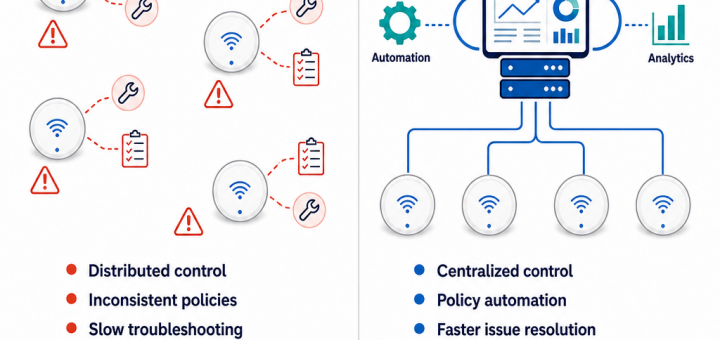
Software-Defined WiFi (SDNWiFi) is a modern approach to managing wireless networks where control is centralized in software, instead of being scattered across individual access points.In traditional WiFi, each device often makes local decisions, which creates inconsistency, slower troubleshooting, and operational overhead at scale. With SDNWiFi, a centralized controller applies policy, security, optimization, and automation across the whole network in real time.Why it matters:- Centralized control: One place to manage all APs, SSIDs, and policies- Faster operations: Automate provisioning, updates, and troubleshooting- Better user experience: Smarter roaming, consistent QoS, fewer dead zones- Stronger security: Policy-based segmentation and role-based access- Scalable growth: Add sites and devices without adding complexity linearlyCore idea in one line:SDNWiFi separates decision-making (control plane) from traffic forwarding (data plane), then orchestrates both through software intelligence.Who should care:- Enterprises with multi-site WLANs- Campuses and high-density environments- IT teams managing IoT-heavy networks- Organizations needing better reliability and lower operating costIf your WiFi is getting harder to manage as you scale, SDNWiFi is likely the shift that turns wireless from a bottleneck into a strategic advantage.
Recent Comments